

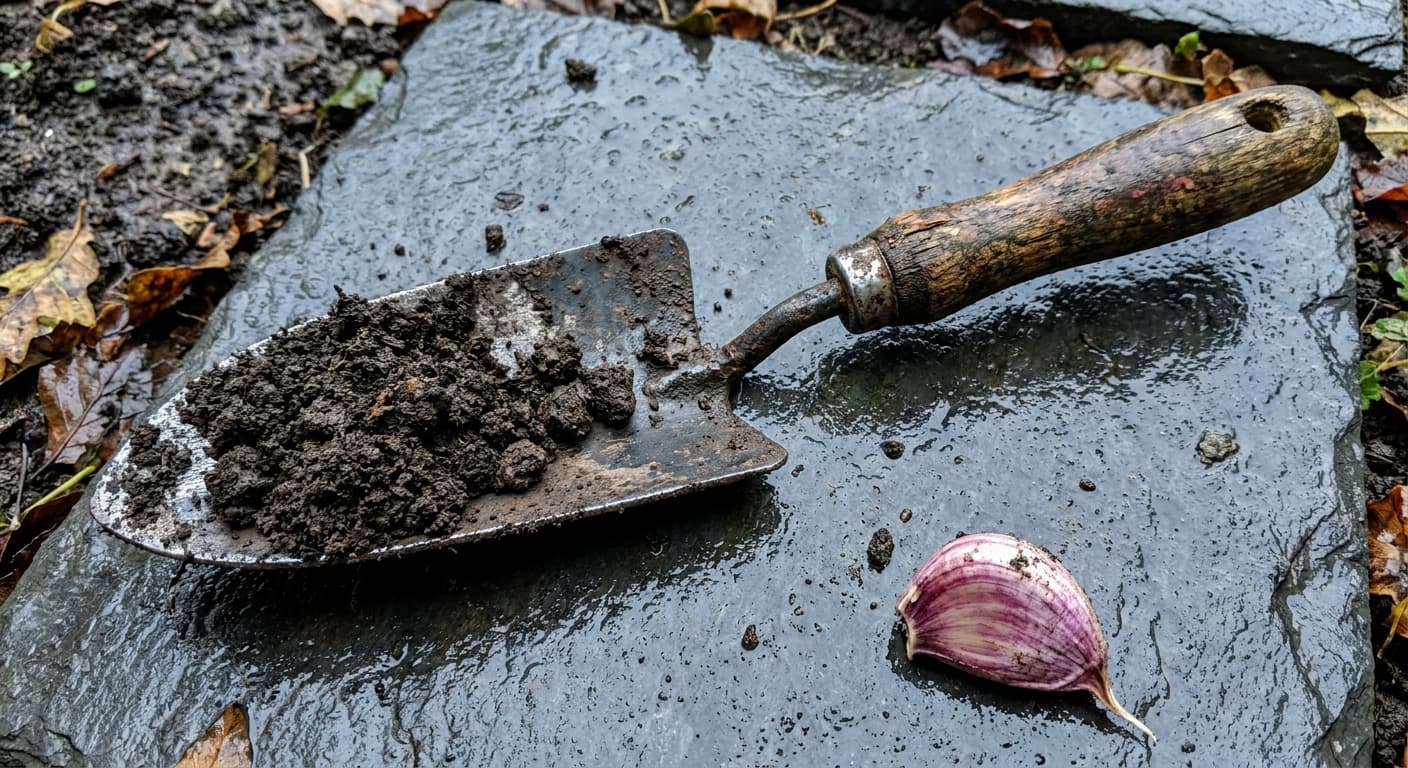


A little garlic story to get you in the mood.
Every grower knows the pull of the damp autumn soil. When you begin planting garlic UK autumn conditions provide the ultimate window in late September. Getting your cloves into the earth during this specific stretch gives the plants a vital head start. They require several weeks in cool, moist soil to establish a strong root network before the deep winter freeze locks up the ground. This underground anchor fuels massive leaf growth when spring returns. Crucially, planting now ensures the cloves experience a cold spell below ten degrees Celsius, a process called vernalisation. This winter chilling triggers the plant to split into multiple fat cloves, producing a beautifully segmented head of garlic.
The Soil Science of Planting Garlic UK
Preparing the ground for planting garlic UK growers often look to the cooling trends of autumn. In late September, morning soil temperatures drop toward ten degrees Celsius. This cooling is the precise cue the seed garlic requires. Planting during this phase allows the root system to grow vigorously and keeps early leaf growth asleep. If you plant during the high heat of summer, the warm earth pushes premature leaves above the surface. These leaves get damaged by the winter frost, forcing the bulb to spend valuable energy regrowing.
Your planting bed needs rich, loose dirt. Clear out the spent summer crops and remove any deep-rooted weeds. Mix in plenty of mature compost to create a loose, dark environment that holds moisture without staying soggy. Separate your seed bulbs into individual cloves just before you plant them, keeping the papery skin intact. Push each clove into the mud with the flat root plate facing down and the pointed tip pointing toward the sky. Aim for a depth of about five to eight centimeters, keeping each plant fifteen centimeters apart to give them room to expand.
Hardnecks and Softnecks in the Cold British Dirt
Choosing the right variety makes all the difference in our varied British climates. Hardneck varieties, such as Lautrec Wight or Music, are exceptionally winter-hardy. These types do wonderfully in the colder gardens of Scotland and northern England. They produce large cloves clustered around a hard central woody stem. In late spring, hardnecks grow a curling flower shoot called a scape. Removing these scapes early ensures that the bulb receives all the plant's energy for maximum growth.
Softneck varieties, like Solent Wight, perform beautifully in the milder climate of southern England and Wales. These plants yield multiple small cloves arranged in tight, overlapping circles. Softnecks develop a pliable stem, making them perfect for traditional braiding. Softnecks also boast tighter wrappers, allowing them to store well for several months after harvest.
Real Mud and Wet Winters
Heavy rain and waterlogged ground are the primary challenges during a wet British winter. Cloves left in stagnant water will rot before they have a chance to grow roots. Successful growers prepare for this by choosing sunny, free-draining beds. Raising the soil surface by creating ridges five to eight centimeters high provides excellent runoff. For gardens with dense, heavy clay, planting in raised beds or containers at least twenty centimeters deep keeps the roots elevated and healthy.
Once your cloves are tucked into the soil, cover the bed with a layer of mulch, such as straw or well-rotted leaf mold. This organic layer buffers the soil against severe temperature swings and keeps competitive weeds at bay. Let the winter rain and cold temperatures do the quiet, invisible work. As the frost sets in, the cloves enter their dormant chilling phase. When the warm spring sun arrives, these established roots will send up strong, leafy shoots, setting you up for a bumper harvest in mid-summer.
To get the most out of your autumn planting, select certified seed garlic that suits your local soil. Pick up a spade, head out into the crisp late September air, and get your cloves into the ground today.